The Holistic Health Benefits of Building Muscle

Muscle is often recommended for appearance, performance, and bone density, but the holistic health benefits of building muscle extend far beyond this goal.
This is something I teach with my clients and one of the reasons why I've stuck with weight training myself for such a long time now, wondering for years why it was so 'empowering' - well, finally the science is catching up.
Beyond aesthetics, building and maintaining muscle influences metabolism, hormonal balance, nervous system function, and long-term physical resilience. When viewed holistically, muscle is less an optional goal and more a foundational piece of long-term health.
Muscle and Metabolic Health
Muscle tissue is metabolically active (as opposed to body fat which is not metabolically active), so it plays a central role in regulating energy use. While its impact on resting metabolism is often overstated, muscle significantly influences how the body stores and processes nutrients.
It is a primary site for glucose (sugar/carb) uptake, which helps stabilise blood sugar levels and improve insulin sensitivity. This has direct effects on energy consistency, appetite regulation, and long-term metabolic health, as well as supporting healthy thyroid function.
In practical terms, greater muscle mass tends to support:
- More stable energy throughout the day
- Improved resilience to changes in food intake
- Reduced risk of metabolic dysfunction
Muscle, in this sense, acts as a stabiliser within the body.
Nervous System and the Stress Response
Strength training influences not only physical capacity but also how the body responds to stress.
When appropriately programmed, it introduces controlled stress followed by recovery and adaptation. Over time, this can improve overall stress tolerance and help regulate the nervous system. This is particularly true for those who learn the big lifts - deadlifts, squats, and bench press - as simply making contact with a barbell 'upregulates' nervous system activity.
Rather than contributing to depletion, well-managed resistance training can increase resilience, supporting a more stable baseline state. This has further supportive implications in mood, focus, and daily capacity.
Structural Strength and Longevity
Muscle supports movement, posture, and joint stability. It allows the body to produce and absorb force efficiently, reducing injury risk and supporting long-term mobility.
More importantly, maintaining muscle mass is closely linked to aging well. Higher levels of muscle are associated with improved functional capacity and better outcomes across a range of health conditions. Muscle supports bone density in women and protects against hip fractures - one of the leading causes of premature death in post-menopausal women. This is actually how my grandmother passed away, back when I was studying fitness and personal training.
Influence on Eating Behaviour
Muscle development can also shape how we relate to food. With improved metabolic regulation, hunger and fullness cues often become more stable. Eating may feel less reactive and more responsive to the body’s actual needs.
When training is a priority, food tends to shift from something to control toward something that supports performance and recovery. This can reduce reliance on rigid rules and encourage a more functional, grounded approach to nutrition.
Psychological and Identity Shifts
Building muscle often leads to subtle but important psychological changes. Progress in strength reinforces consistency and can shift identity, from someone focused on restriction and weight loss, to someone actively building capacity and supporting their body. ‘Growth phases’ focused on strength development and maximising metabolic output have always proven an empowering step with my clients in between dieting phases whilst they strive for their ideal physique.
There is also an element of reconnection and embodiment, as strength training requires attention to physical sensations like effort, fatigue, posture and tension, which can gradually rebuild awareness of the body. For those who feel disconnected, this can be a meaningful point of re-engagement.
For my clients who show up to a session anxious, just a few slow, steady exercises with focussed effort can calm their whole system down. So, weight training is very powerful for women.
Are You Sold?
Muscle is not simply an aesthetic outcome. It contributes to metabolic stability, stress regulation, structural integrity, and the way the body interacts with food.
Approaching muscle from a broader perspective allows it to be integrated into a more sustainable model of health—one that prioritises function, resilience, and long-term wellbeing.
In this sense, building muscle is less about changing how the body looks, and more about supporting how it works.
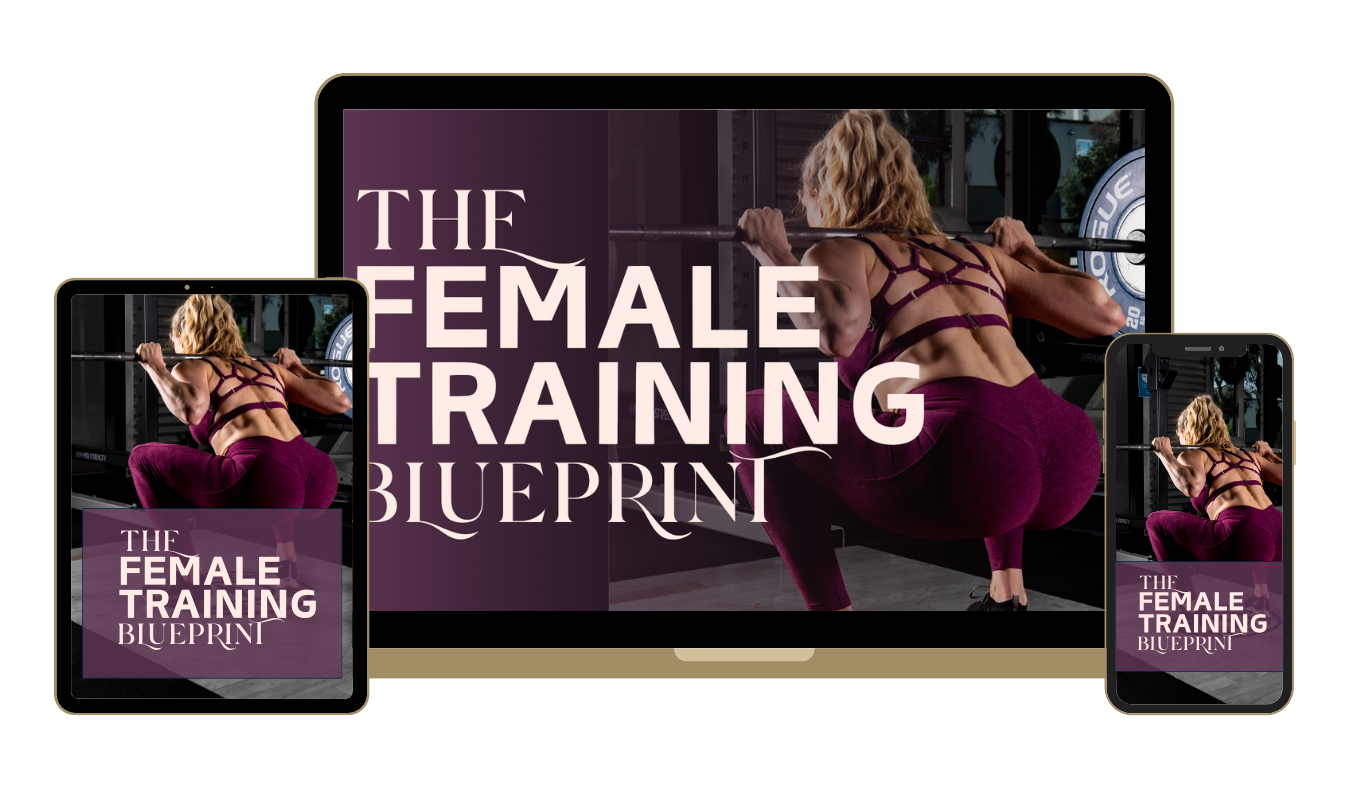
Female Training Blueprint
For more information, and a step-by-step guide on weight training for women, check out my short course on the topic, or enquire into personal training with either myself (Gold Coast) or Emily (Canberra).
Jen X
Author