Are You Even Connected to Your Body?
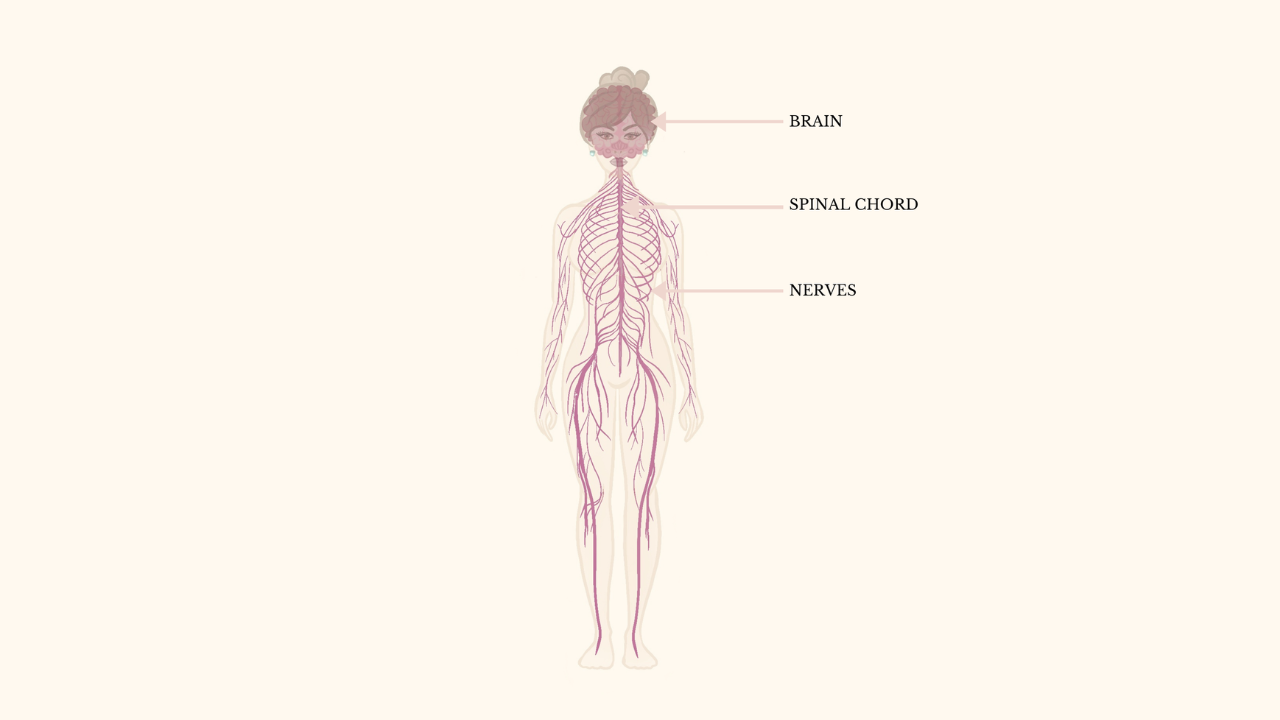
Much of the conversation around eating, fat loss, and consistency assumes that we are able to accurately interpret body signals. Hunger, fullness, energy levels, and emotional states are assumed to be accessible and suggested to be used as a reliable guides for behaviour around food.
In reality, this is often not the case, and this is why so many women get stuck.
Recently while working with a client who is attempting to build the skills to maintain a 30kg weight loss, I asked her to track what she feels in her body before she buys junk food (the very junk food she doesn’t want to eat any longer). She realised after trying for weeks, she can’t feel 'anything’. I’ve been there, and that is why I am writing about it now.
For many people, the connection to their body is limited, inconsistent, or absent altogether. Eating decisions are not driven by internal needs (as the signals are completely absent), but rather by habit, external rules, emotional states, or mental ‘negotiation’ (food noise, anyone?). This creates a sense of confusion - knowing what to do in theory, but finding it difficult to apply in practice.
Before addressing what or how to eat, it is worth asking different question: is there a clear connection to the body to begin with?
What Does “Being Connected” to Your Body Even Mean?
Being connected to the body does not refer to a vague sense of mindfulness or simply “paying more attention.” It is more specifically a capacity: the ability to perceive and interpret internal signals with a reasonable level of clarity.
This includes:
- recognising physical hunger and fullness
- noticing shifts in energy or fatigue
- sensing emotional states as they arise
- detecting tension, discomfort, or ease within the body
When this connection is present, eating behaviour tends to be more stable and responsive. Decisions are not only cognitive; they are informed by direct internal feedback. But most often, through stress, trauma or a lack of teaching in this area, we can’t feel anything at all.
When it is absent, eating, behaviour and life choices are often run by external structure or reactive impulses.
How Disconnection Develops
Disconnection from the body is rarely accidental. It is usually the result of learned patterns that, at some point, served a purpose.
Dieting is one of the most common contributors. Repeatedly overriding hunger, delaying meals, or imposing strict rules teaches the body that its signals are not to be trusted. Over time, awareness of those signals can diminish. The world telling us how we should look is a cause for disconnection too, as we assume that what we are feeling or hearing is ‘not right’ as we don’t look the way we are ‘supposed’ to.
Emotional and psychological factors also play a role. For some, tuning out bodily sensations is a way of managing discomfort. If certain feelings such as stress, anxiety, or vulnerability are consistently avoided, the body can become something to disconnect from.
Chronic busyness reinforces this pattern. When attention is constantly directed outward towards work, responsibilities, or external inputs, there is little space left to register internal experience. there is also little time or capacity to do what is 'right' or best, often resorting to what is most convenient.
These adaptations are not failures. They are forms of efficiency: ways of functioning that reduce friction in the short term and to support us in our survival. However, they often come at the cost of long-term awareness.
What Disconnection Looks Like in Practice
A lack of connection to the body does not always present as something obvious. It often appears in subtle but familiar patterns.
Eating may follow rules rather than genuine hunger. Eating may be driven by urges that seem to come “out of nowhere,” without a clear understanding of what prompted them. Fullness cues may be missed or recognised only after discomfort sets in. Hunger may feel urgent and overwhelming, or distant/unclear.
There can also be a tendency to rely on thinking - calculating, planning, analysing - while simultaneously feeling uncertain about what the body actually needs. In these situations, behaviour can feel inconsistent not because of a lack of effort, but because the internal feedback system is not fully accessible.
The Role of the Nervous System
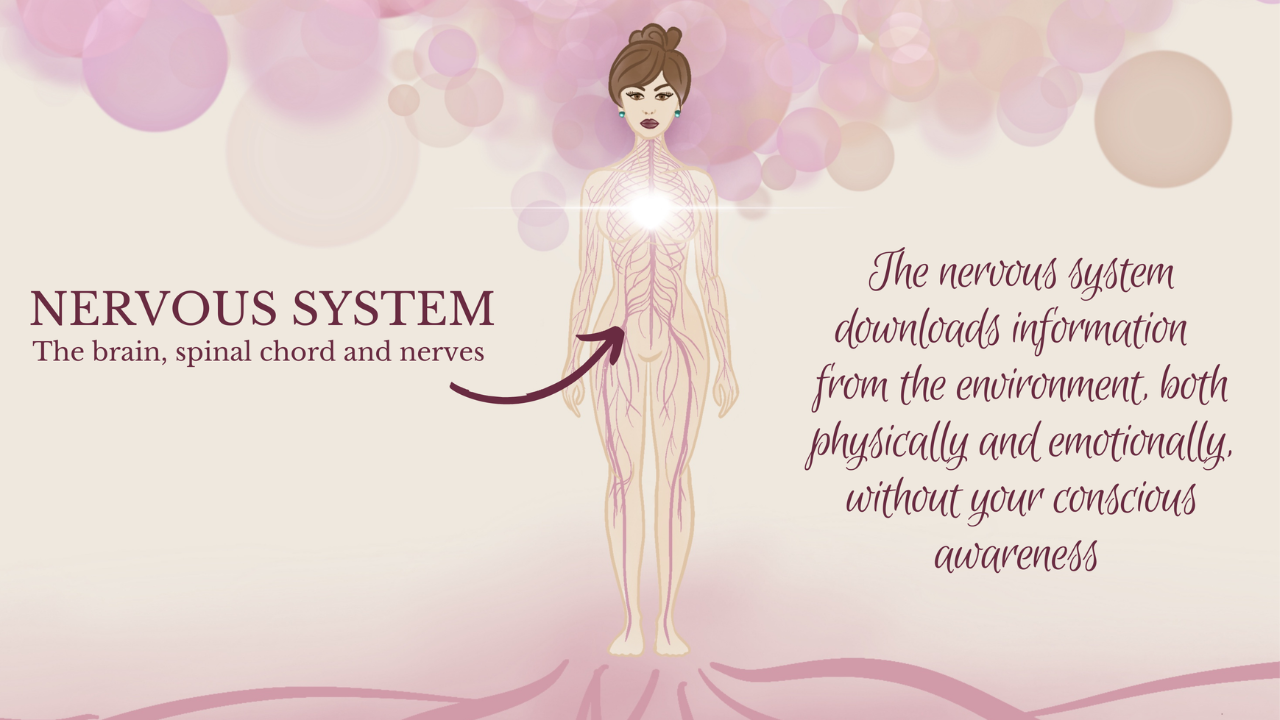
The ability to perceive bodily signals is closely linked to the state of the nervous system. When the nervous system is regulated, there is generally more capacity to notice subtle internal cues. Hunger can be distinguished from emotional desire, and sensations can be observed without immediate reaction.
In contrast, when the system is under stress - whether through overload, fatigue, or chronic pressure - our attention tends to narrow. The body prioritises immediate survival responses over nuanced awareness. This can lead to two common outcomes. Signals may become amplified, such as intense hunger or strong cravings, or they may become muted, resulting in numbness or disconnection.
In both cases, behaviour becomes more reactive and less attuned.
To learn more about stress and self-regulation, check out my transformational online program Identity and Mindset Mastery: A practical framework for women who want to understand themselves deeply, break old loops, and follow through with confidence.
Why This Matters for Eating Behaviour
Without a clear connection to the body, eating becomes difficult to regulate in a flexible, sustainable way.
External structures like meal plans or challenges with guidelines can provide temporary guidance, but they do not replace internal awareness. When these structures are removed or disrupted, there is little internal reference point to rely on.
This is one reason why many individuals cycle between periods of strict control and periods of disconnection or overeating. The underlying issue is not simply behaviour, but the absence of a stable internal anchor.
Developing that connection does not eliminate all challenges, but it creates a foundation for more consistent decision-making.
Rebuilding Connection
Reconnecting with the body is not quick, nor is it achieved through analysis. It is a gradual process of directing attention back to internal experience in a way that feels manageable. This does not require constant monitoring. In fact, overly intense focus can be counterproductive. The process is more about introducing small moments of awareness over time.
Essentially, it's a process of building safety.
Luckily, the body knows what to do when we set the right conditions, so all we really need to do is set those conditions.
This might involve pausing briefly before or after eating to notice physical sensations, or becoming aware of changes in energy or tension throughout the day. The aim is not to interpret everything immediately, but to begin recognising that signals are present.
Over time, these signals tend to become clearer and more accessible. As they do, behaviour often begins to stabilise - not through increased control, but through improved alignment.
A Different Starting Point
Much of the advice around eating assumes that the body is already a reliable guide. When this is not the case, applying strategies built on that assumption can lead to frustration.
Reframing the starting point can be more effective.
Rather than asking what diet to follow or what rules to apply, it may be more useful to consider whether there is a sufficient connection to the body to support those decisions.
In many cases, rebuilding that connection is not a secondary step. It is the foundation that allows everything else to function more effectively.
In Summary
Eating behaviour is not driven solely by knowledge or intention. It is influenced by the ability to perceive and respond to internal signals, a capacity that can be strengthened or diminished over time.
Disconnection from the body is common, particularly in environments shaped by dieting, stress, and constant external focus. Recognising this is not a sign of failure, but an important point of awareness.
From there, the process becomes less about applying more control, and more about restoring access to something that was always there, but may no longer be fully recognised.
Coaching
If you're looking to build a healthy relationship with your body, book a consultation or check out my services here.
Author