Your Addiction To Junk Food Is Not About Willpower - It’s By Design.

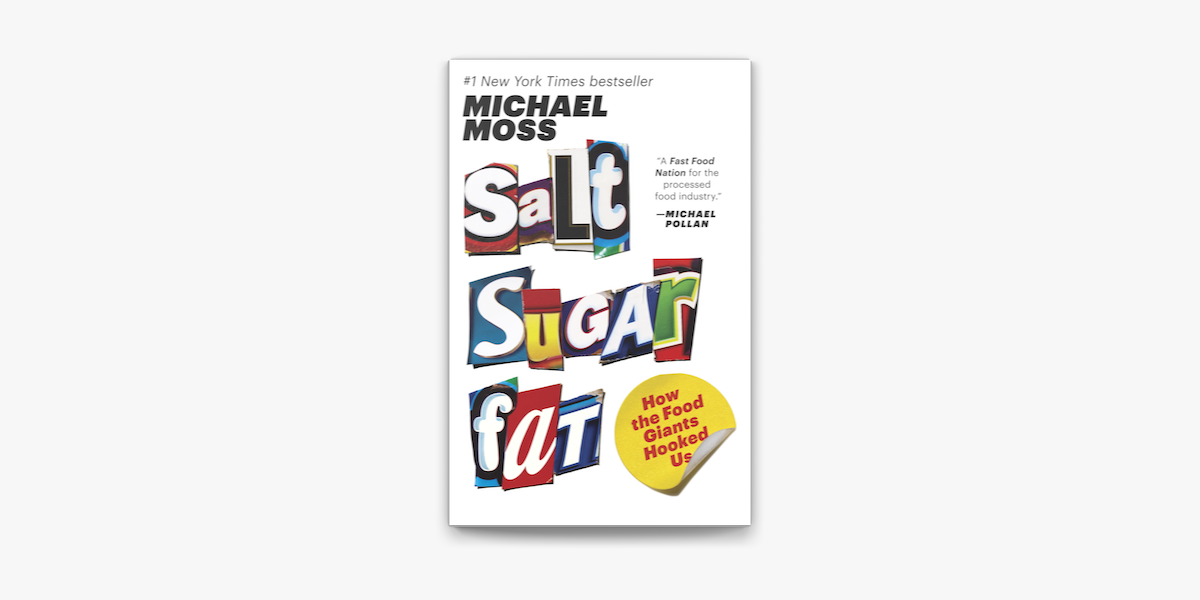
About ten years ago, I read Salt, Sugar, Fat by Michael Moss. At the time, I didn’t realise how much that book would change the way I saw food, but to this day I haven’t looked at it the same.
I remember walking into the supermarket afterward to ‘check’ if he was right, realising quickly that the patterns Moss described were very real and shape the way we relate to food in a big way.
In this post, I’ll share with you what he uncovered, and how this leads you to feel’addicted to junk food’, and hopefully convince you that it is not your fault you can’t stop eating these foods.
What the Book Actually Revealed
At its core, Salt, Sugar, Fat exposed how food companies deliberately engineered products around very specific combinations of salt, sugar, and fat - to maximise consumption. Not satisfaction. Consumption.
These combinations are often referred to as “bliss points” — precise ratios that stimulate the brain’s reward system while delaying satiety (felt sense of ‘fullness’). Food scientists didn’t rely on intuition or culinary tradition to find these ratios - they tested them, refined them, and optimised them using consumer data and behavioural research.
The goal wasn’t to make food deeply nourishing or even particularly filling. The goal was to make it easy to eat, easy to keep eating, and easy to return to.
Seeing the Ratios in Real Life
Walking through the supermarket with this lens, the structure becomes obvious.
Savoury snack foods almost always combine fat and salt. Sweet snack foods tend to combine sugar and fat. Breakfast foods often mix sugar and salt, sometimes under the guise of “health” or “energy.” Very few ultra‑processed foods rely on a single dominant flavour, and even fewer are built around protein or fibre as the primary feature.
What’s striking is not just what’s present, but what’s absent. These products rarely contain enough protein, fibre, or structural resistance to trigger genuine fullness. They dissolve quickly, require minimal chewing, and leave very little sensory residue behind.
This is not an accident, it's an extremely effective design.
Why These Foods Feel Hard to Stop Eating
If you’ve ever noticed that one bite doesn’t feel like enough, or that stopping feels harder than starting, there’s a reason for that. These foods are engineered to activate reward quickly while staying under the radar of your body’s stopping signals.
Fast melt rates, smooth textures, crunch that signals freshness, and flavours that peak early all contribute to a nervous system message of “more needed”, and all of this happens subconsciously (beyond your conscious awareness).
Fullness arrives late, if at all, and by the time it does, the behaviour is already well underway.
This experience is often misinterpreted as a lack of discipline or control. In reality, it’s a predictable response to repeated exposure to inputs designed to override self-regulation and appetite control.
Why This Matters for Appetite and Body Regulation
When someone is regularly eating foods that bypass satiety, appetite cues start to feel unreliable. Hunger becomes louder and less specific. Fullness becomes harder to detect. Eating shifts from a regulated behaviour to a reflexive one, especially under stress.
Over time, this contributes to patterns people often blame themselves for: overeating, emotional eating, food noise, weight gain, and a growing distrust of their own body signals. The body isn’t broken in these cases. It’s being consistently overruled.
This is also why advice like “just eat less” or “find balance” often fails. Once food is engineered to defeat stopping cues, willpower is no longer the relevant variable, and so removing the foods becomes the easiest way to overcome the pattern.

Why This Isn’t the Same as Normal Pleasure
Enjoyment isn’t the problem. Humans have always sought pleasure in food. One of my favorite movies as a teen was ‘Ever After’ and I vividly remember her ‘ugly stepsister’s’ reaction when she first tried chocolate- like it was yesterday.
Sometimes, words can’t even express how we feel when we eat certain foods, as our senses are too overwhelmed to compute.
The issue here is that ultra‑processed foods are not designed to be pleasurable in a way that leads to completion, but rather designed to be pleasurable in a way that leads to repetition. Satisfaction would end the loop. These products are designed to keep it open.
That distinction matters, especially when people start believing they are uniquely flawed for responding the way they do.
Where Muscle and Real Satiety Fit In
If you look at what actually stabilises appetite over time, it’s not more control. It’s more capacity.
Muscle mass increases your ability to handle carbohydrates, regulate blood sugar, and tolerate energy intake without dramatic swings. Protein and fibre slow digestion, increase sensory feedback, and create a sense of completion that processed foods deliberately avoid.
This is why strength training, adequate protein, and whole foods don’t just change body composition — they change how hunger feels. They restore a conversation between the body and the brain that bliss‑point foods disrupt. And even then, abstaining from these foods can be the most important piece of the puzzle moving forwards.
The Deeper Impact People Rarely Name
One of the most damaging effects of engineered food is not weight gain, but disconnection. When hunger, fullness, and satisfaction become unreliable, trust erodes. People stop believing their body is a safe place to listen from, and eating becomes something to manage rather than respond to.
Understanding that this was engineered can be profoundly relieving. Shame softens. Self‑blame loosens. Curiosity comes back online.
From there, the work stops being about avoidance and starts being about rebuilding regulation — physically, neurologically, and emotionally.
That is the part you don’t see on the nutrition label. But once you see it, it explains far more than personal failure ever could.
Jen X
Author