Tired, But 'Healthy': When Your Bloodwork is Fine But You're Exhausted

You are sitting in at doctor’s office, feeling dead-tired. You can barely muster the energy to sit upright and you're wondering how you'll make it through the day. You’ve been dragging yourself through your life for months, waking up just as exhausted as when your head hit the pillow, desperately hoping your doctor will finally give you an answer.
You're calling into the office, your doctor smiles;"Good news! Your bloodwork is completely normal. Everything looks perfect. You’re probably just a little stressed, how about you try to get some more sleep."
Your heart sinks. Instead of feeling relieved, you feel utterly defeated. Why don't they have the answer?
If you can relate to this, I feel you. I was there 10 years ago. I was suggested resting, antidepressants, and asked to stop getting blood tests, as I was 'draining the medical system'. And that was after I ordered some of my own tests, and the doctors scoffed at me.
But I was desperate. I know the quiet desperation of having a body that feels broken, only to be told by 'science' that I am perfectly fine. If you are currently dealing with extreme fatigue but your bloodwork is normal, I need you to hear this clearly: You are not crazy, you are not lazy, and your illness is not in your imagination!
Standard medicine is simply looking in the wrong place.
Why am I so tired if my labs are fine? The Bloodwork Illusion.
When a doctor orders standard blood work, like a Complete Blood Count (CBC), a metabolic panel, or a basic thyroid check (TSH), they are looking for acute pathologies. They are checking to see if your organs are failing, have severe anemia, or if you have a clinical diagnosable disease.
If those tests come back normal, it means your physical machinery hasn't broken down yet. But it does not mean your system is running efficiently - it's on it's way, it just hasn't arrived at this time.
Standard blood tests completely miss the invisible load on your nervous system. They don’t measure the toll of living in a state of hyper-vigilance for years. When you are chronically overwhelmed, your brain doesn't care about your lifestyle goals or your to-do list; it cares about survival.
In chronic survival, the body starts to shut things down in order to protect itself.
What does a dysregulated nervous system fatigue feel like? Enter "Functional Freeze."
When you face prolonged stress - whether from a high-pressure job, emotional trauma, or just the relentless pace and mental load of modern life - your body initially responds by pumping out cortisol and adrenaline. This is the 'fight or flight' response.
But your body cannot run on emergency fuel forever. Eventually, when the stress doesn't stop and your system realises it can no longer fight or run away, it pulls the ultimate emergency brake.
In neurobiology, this is called Functional Freeze.
Your brainstem decides that the safest thing to do is to conserve resources. It dials down your cellular energy production, slows your metabolism, and leaves you feeling completely flattened. Your body is deliberately putting you into a state of hibernation to protect you from burning out any further.
For me, I was face down on the bed for weeks whenever I had the chance. I told everyone around me how tired I was and no-body seemed to care (or they would just tell me how they were 'so tired' too). I recall one morning, months later, I was ecstatic because I had mustered the energy to vacuum my own PT studio floor.
Your fatigue isn't a malfunction. It is a highly coordinated survival strategy by a nervous system that has run out of safety.
Why lifestyle changes don't work for chronic fatigue.
This is the exact point where traditional health advice backfires terribly.
When people feel exhausted, they usually try 'outside-in' fixes. They attempt to force themselves into a morning exercise routine, push through with willpower, over-optimise their diets, or drink more caffeine.
Or perhaps, you're so convinced after all that gaslighting that maybe you're just 'making it up'.
But if your body is in a protective freeze state, pushing harder is the worst thing you can do. Your nervous system perceives that extra push as more threat, which only makes it lock down your energy reserves even tighter. You cannot think, eat, or discipline your way out of a physical survival loop.
This also goes for ice baths, extreme head, radical diet changes, and any kind of high intensity training.
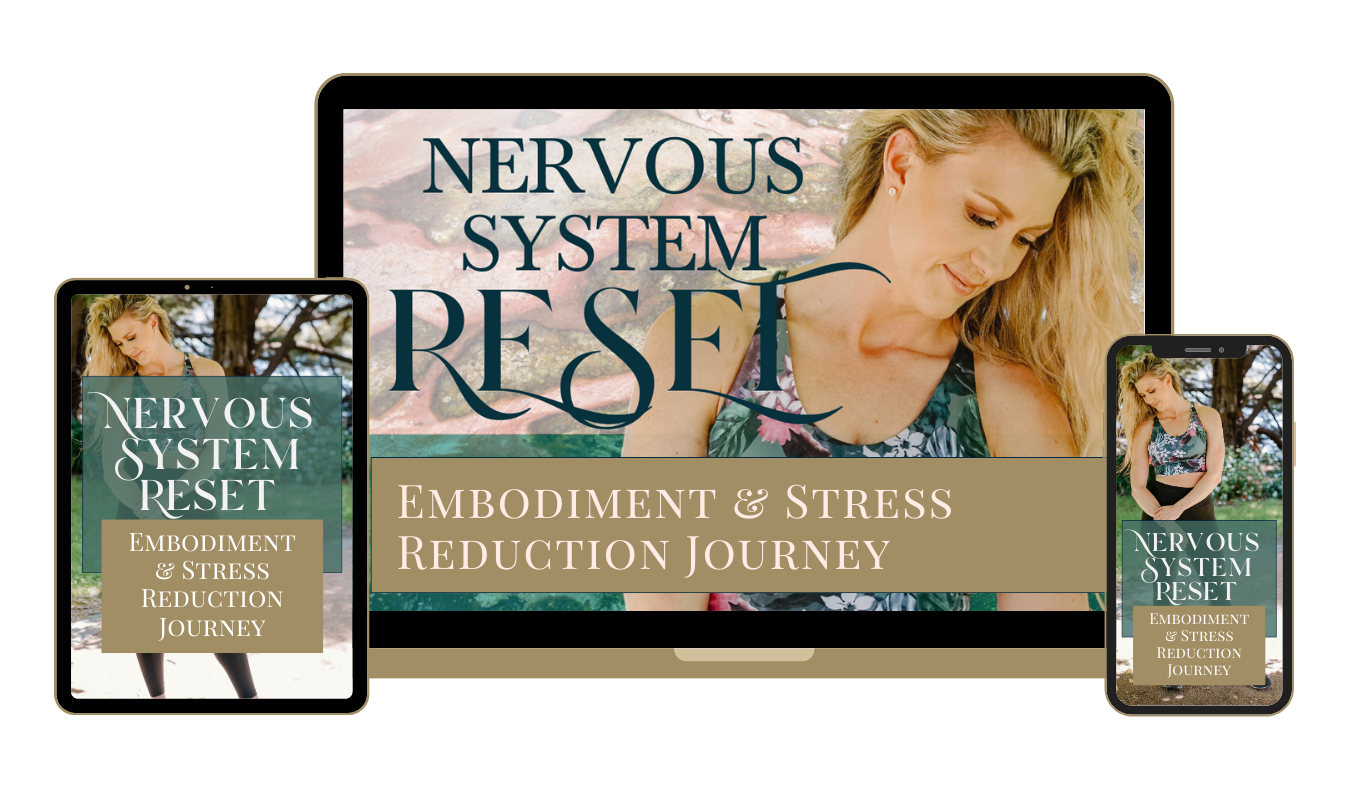
The ultimate cheat-sheet for healing this lies in embodiment and stress-management, and if you're interested in working on this you can check out my short course The Nervous System Reset for support.
What is Embodied Health Coaching, and how does it heal fatigue?
Recovering from deep, systemic exhaustion requires shifting from an 'outside-in' approach to an embodied framework.
As an Embodied Health Coach, I don’t treat your body like a machine to be optimised with a strict checklist. We have to treat your body like a living environment that currently feels unsafe.
Healing doesn’t come from adding more to your plate; it comes from learning to listen to the subtle physical cues your body has been screaming at you for years. Together, we work on:
-
Somatic Safety: Using gentle, body-based practices to signal to your brainstem that the immediate danger has passed.
-
Energy Rationing: Learning to honour your actual physical capacity today, rather than what your mind thinks you should be doing (a common trap).
-
Rebuilding Body Trust: Moving away from rigid, brain-heavy rules and learning to decode your body's authentic signals for hunger, rest, and movement.
If your lab reports are perfect but you still feel empty, stop looking for a chemical deficiency. Your body is simply waiting for you to stop fighting it, so it can finally let its guard down and regenerate.
If you're looking for support here, check out my Embodied Women's Health Coaching page for more information on how I can support you through this.
Alternatively you can book a call here.
Jen X
Author